
Same Room, Same Results: Why You Don’t Outgrow Your Environment
Jan 05, 2026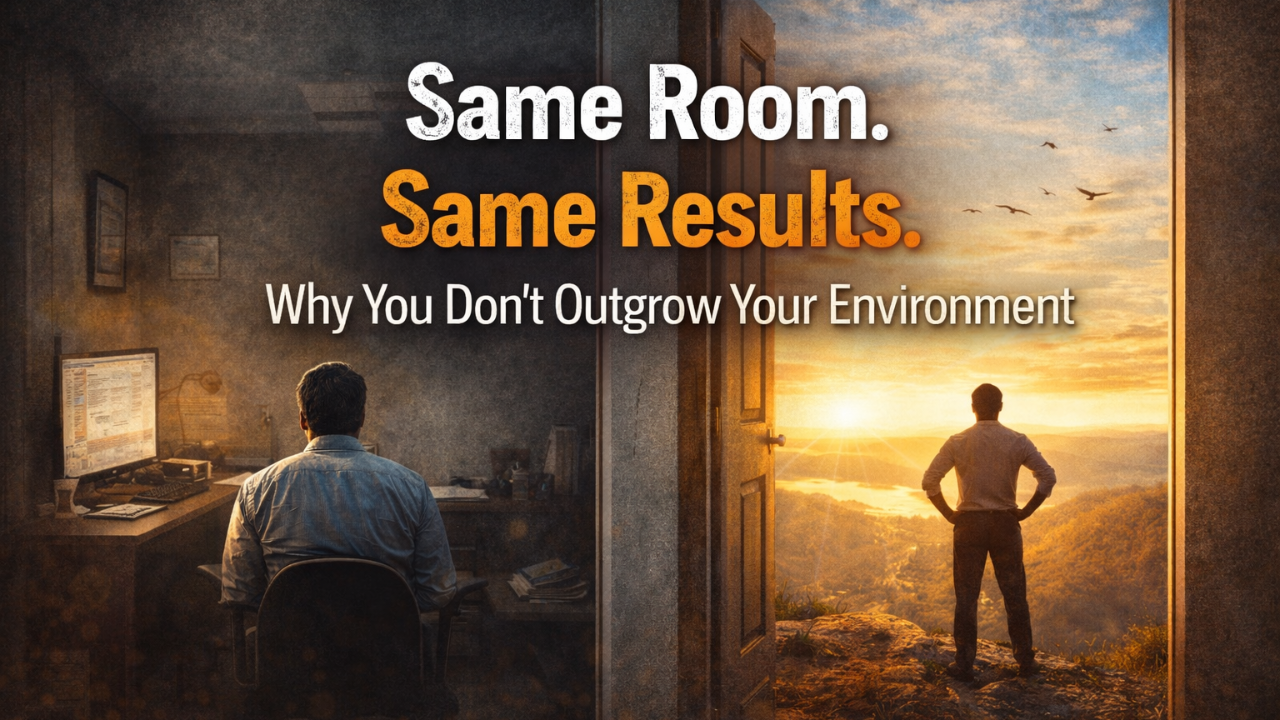
Growth doesn’t come from wanting more—it comes from changing rooms.
Here’s a truth many people resist longer than they should:
You don’t outgrow your environment.
You can work harder.
You can set better goals.
You can know—deep down—that you’re capable of more.
But if you stay in the same rooms—surrounded by the same conversations, the same expectations, the same standards—your results will stay the same.
That’s not a discipline problem.
It’s not a motivation problem.
It’s an environment problem.
Why Growth So Often Stalls
Most people try to grow inside environments that were never designed to support growth.
They expect:
-
Higher confidence
-
Better decisions
-
Greater income
-
Stronger leadership
While staying immersed in:
-
Old perspectives
-
Familiar limits
-
Comfortable standards
-
Conversations that never challenge them
At first, effort carries them forward.
But eventually, something stalls.
Not because they failed—but because the room stopped demanding anything new from them.
Environment Sets the Ceiling
Environments do something subtle but powerful:
They define what feels normal.
What feels “too much.”
What feels risky.
What feels unrealistic.
Over time, those norms become internalized.
People don’t usually lower their standards intentionally.
They absorb the standards around them.
And once that happens:
-
Growth requires friction
-
Change feels unsafe
-
New levels feel foreign
So people adapt—not upward, but inward—to fit the room.
Why Effort Alone Stops Working
This is where many get confused.
They assume that if progress slows, the answer must be:
-
More discipline
-
More pressure
-
More willpower
But effort doesn’t raise standards.
Exposure does.
When higher thinking is normal, thinking expands.
When discipline is expected, follow-through strengthens.
When growth is assumed, people rise to meet it.
This isn’t psychology.
It’s structure.
The Rooms That Change People
Serious people are intentional about their environments for a reason.
Not because they’re chasing hype.
Not because they need motivation.
But because they understand something fundamental:
Environment shapes identity—and identity shapes outcomes.
The rooms you spend time in determine:
-
What you believe is possible
-
What you tolerate
-
What you pursue
-
What you postpone
And over time, those decisions compound.
Why Self-Improvement Fails in Isolation
Self-improvement isn’t just about learning new ideas.
It’s about reinforcing them consistently.
In isolation:
-
Old habits regain strength
-
New standards feel heavy
-
Growth requires constant self-policing
In the right environment:
-
Growth is reinforced naturally
-
Standards are shared
-
Progress feels supported instead of forced
This is why people plateau—not because they stop caring, but because they try to grow alone inside rooms built for maintenance, not expansion.
A Better Question for the New Year
As a new year begins, most people ask:
“What do I want more of?”
A better question is:
“What rooms am I staying in?”
Because rooms either:
-
Reinforce who you’re becoming
-
Or pull you back toward who you used to be
The difference isn’t intention.
It’s exposure.
From Survival to Freedom Requires New Rooms
Freedom doesn’t come from trying harder inside the same constraints.
It comes from placing yourself where:
-
Growth is expected
-
Responsibility is normal
-
Higher standards are reinforced
That’s how ceilings lift.
That’s how confidence stabilizes.
That’s how progress becomes sustainable.
Not overnight.
But inevitably.
If you’re thinking about what kind of environments will shape your next year, continue the conversation here.